Resources

This section contains articles and topics of interest to those meeting the challenge of improving performance in Manufacturing and Process Industries.
That includes guidance to site resources on the topics of Taming Technology, Ratcheting Up Performance, Delivering Better Projects Faster and Digital CI.

From Problem Solving to Focussed Improvement
- Details
- Category: Resources
Although problem solving skills are desirable, an over dependence on them is a common characteristic of under performing organisations, Waiting for problems to occur before taking action, is a recipe for high costs and poor customer service.
Research into the causes of unplanned stoppages highlights how around 85% of unplanned downtime is due to human error and poor working routines. Investing time in Focussed improvement deals with these issues to achieve problem prevention rather than problem solving.
Locking in Performance Gains
- Details
- Category: Resources
For assets that have achieved stable operation by establishing basic conditions, the next step involves locking in the gains by investing time to prevent the causes of recurring problems.
That includes the reduction of accelerated deterioration which is a significant factor in component failures. This can be due to, for example, contamination or scattering of dust and dirt or skill and knowledge gaps due to:
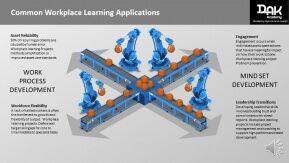
Workplace Learning and Engagement
- Details
- Category: Resources
We forget about 75% of what we have learned if it is not applied within 6 days so practical application is an essential part of successful skill development.
Workplace Learning blends training with practical projects in a way that helps adults to build on existing knowledge. Workplace Learning also involves team based activities to activate peer learning (If people want to know something the first thing they do is to ask a colleague).
The outcome is accelerated adult learning, increased engagement with new ideas and the delivery of added value gains such as improved reliability, flexibility and problem prevention.
So how can we make best use of that process?
Lean TPM Roadmap: Ratcheting Up Performance
- Details
- Category: Resources
Ratcheting Up Performance covers the second part of the journey to industry leading performance. The first part of the journey "Taming Technology for Good" deals with the causes of recurring problems.
This step concerns the use of Focussed Improvement tactics to define a realistic and achievable improvement glide path and mobilise actions to progress along it. The gains include improved process consistency, reduced defects and energy costs.
Developing Manufacturing Leader Improvement Skills
- Details
- Category: Resources
The Manufacturing Leader role involves problem solving to meet today's deadlines whilst simultaneously driving actions to improve future performance.
To do that well requires a sound understanding of:
- The causes of unplanned downtime, lost performance and quality defects,
- How to recognise and reduce accelerated wear,
- How to engage their team in activities to surface and prevent mis operation and wasted effort,
- How to turn a Plan, Do, Check Action cycle as part of the work routine.
The Learning Goals below set out a learning plan for Manufacturing Leader Core, Intermediate and Advanced skill levels to support their development.

The Improvement Leader Network
- Details
- Category: Resources
At the heart of any practical improvement process is a network of improvement leaders such as Business Sponsors, Change Agents, Front Line Leaders and Improvement specialists.
Developing the capability of those involved will only accelerate the pace of progress and establish role models for others to follow.
How can that be done?
The Digital LeanTPM Blueprint
- Details
- Category: Resources
The Digital CI Blueprint expands the scope of Operational Excellence tools like Lean and TPM to include the selection and use of data, analysis and model development to drive out waste and enhance real time added value. An approach based on the lessons learned by well known and award winning organisations who have achieved step up gains from the delivery of advanced technology.
The approach was developed to overcome the traditional IT systems approach which results in the creation of personal spreadsheets and work arounds to manage day to day decision making.
The outcome is an information fog with multiple versions of the truth that reinforce wasteful silo management and finger pointing.
The creation of a Digital CI blueprint to systematically "Close the Loop" between the physical and digital worlds removes legacy barriers to best practice and speeds up decision making.
Deliver Better Projects Faster
- Details
- Category: Resources
Most managers have had experience of projects which failed to deliver their promise or where costs escalated far beyond their original estimate. This theme covers the causes of common problems of project delays and overspend with the aim of providing a road map to deliver flawless operation from day 1 for new operations, new assets and upgrades.
One of the most common causes of Manufacturing Project Management failure can be traced back to the organisations approach to Performance Management. Where this is weak, in the short term it is just easier to work around problems and move on. It is a pragmatic approach but one that results in project teams weighed down by that legacy outlook.

Preventing Project Problems
- Details
- Category: Resources
Predicting the Unpredictable: Assessing your project process. This PDF sets out common hidden project lossess when delivering new products or capital projects.
What is Early Equipment Management
- Details
- Category: Resources
Early Equipment Management is an approach to capital projects that surfaces latent project problems early in the project timeline so that they can be dealt with when they are easier to resolve. It also highlights opportunities to enhance project value and achieve higher levels of return on investment.
At the heart of EEM is a road map that systematically targets project risk areas and the pitfalls that increase project costs and extend project timescales. At the same time, the EEM process guides the creation of best practice design benchmarks and enhances cross functional collaboration to deliver better projects faster.
Check out our EEM support plan or Contact us to find out more about how we can help you to deliver better projects faster.
-
The Need for EEM
EEM extends the traditional project focus of delivering a new asset or engineering platform to that of delivering Operational Excellence. The difference is the humanisation of projects to incorporate not just what will be done but how it is done. This is characterised by increased collaboration between commercial, operations and technical personnel at all project steps.
This was developed to counter the root causes of projects which limp along after the planned beneficial operation start date has passed like a car which can be driven but is not firing on all cylinders. It needs a lot more care and attention and costs more to run.
Analysis of the reasons why some projects do not achieve their full potential suggests a number of common causes.
These are not due to technical problems but to people issues including knowledge gaps, poor communication and collaboration.
The goals of Early Equipment Management (EEM) are to achieve “Flawless operation from production day 1” and consistently low Life s Cycle Costs (LCC) for the lifetime of the installation.
Flawless operation from day one means simple zero unplanned stoppages/sporadic failures from the planned operating date. Then during the first few months of operation the performance can be improved as the route to process optimisation becomes clear.
The core of the EEM process is the use of systematic analysis around key decision points or milestones. Activities to deliver each milestone are coordinated by design standards and checklists to avoid omissions and assure objective decision making.
Each milestone incorporates an improvement theme to drive the innovation process and align the efforts of the project team. This also provides a framework for management to review progress, the injection of knowledge from other projects and the capture of lessons learned from the current project
A major oil and gas provider estimated that adopting Early Equipment Management principles on their project contributed an additional 5% operating efficiency per year over the life of the asset. Enough to pay for the original capital investment.
 Getting the Right Specification
Weaknesses in the early stages of a project have a cumulative impact on the rest of the project. The most important factor in the early stages of a project is getting the right scope of the project.
Starting with a broad outline of what you want to achieve and explore a number of options before deciding on the preferred option. The building blocks of success at the stage are characterised by processes to exclude inappropriate options.
Common weaknesses at this stage are set out in the tables below.
Problem Design Revisions Description Changes to design or priorities after sign off stage Why is it bad? Wasted effort and additional costs. What are the causes Indicates that the original specification was under developed, gaps in knowledge or a lack of understanding. How to reduce it Formal investigation of current weaknesses will provide increase understanding of the assessment of a wide range of options Problem Knowledge gaps Description Lack of understanding of operational reality/constraints or best practice design. Why is it Bad Risk of missing or inappropriate design elements What are the causes Not involving the right skills/capabilities within the team or vendor/project partner How to reduce it Cross functional project team profile, clear design standards/targets and systematic option generation/evaluation process.  Getting the Detail Right
Once the specification scope is defined and a vendor is selected the detailed design process can start. A common pitfall at this stage is assuming that the impact of any risk of not meeting the specification rests with the vendor. The vendor can influence only around half of the factors that impact on project delivery risk.
Successful projects at this step are characterised by working with the vendor to understand how their offering will be used with the goal of reducing asset life cycle costs. This Design to Life Cycle Cost approach surfaces weaknesses in the design or specification and supports the development of work routines and maintenance standards for the new asset.
The gains include reduction in project life cycle costs and higher than expected return on investment. Done well, this also speeds up the time to beneficial operation.
Two common weaknesses at this stage are gaps into the setting of standards and poor design of work routines. This is something that needs attention to detail by users because vendors do have the product knowledge to be able to define effective work routines. Naturally they can assist with this but the quality of work routines depend on the engagement of users. They are the only ones who can integrate the new practices within the existing routine and develop the skill sets needed to secure stable operation.
Problem 1 Gaps in technical understanding can result in avoidable failures due to human error and poor factory readiness planning. Why is it bad? Latent specification or design weaknesses surface at installation and commissioning. What are the causes Limited understanding of design performance under operational conditions. Lack of design guidance/standards by operational users How to reduce it Establish EEM design standards for new and related operating methods to support the systematic evaluation design features. Problem 2 Predictable yet unforeseen project delays and vendor disputes Why is it Bad Extended project delivery times/increased costs What are the causes Unclear work specification, poor collaboration with vendors, cost driven contractual arrangements, incomplete factory readiness planning. How to reduce it Structured engagement of users pre vendor selection, focus on problem prevention during detailed design, work routine design prior to installation, learning plans for core, intermediate and specialist skill levels applied as part of commissioning and production ramp up.  Managing Project Delivery
Problems at this step are often due to weaknesses earlier in the project. The focus here is on problem prevention to minimise the risk of human error and factory readiness planning to support the glide path to flawless operation and production ramp up.
Two common weakness at this stage are gaps in accountabilities and skill development for core, intermediate and specialist task completion.
Problem Operability, maintainability, safety/reliability problems surface during installation/commissioning Why is it bad? Delayed project start up, increased costs/resources What are the causes Poor stage gate review process, weaknesses in work practice design and training. How to reduce it Assess project criticality and risks to delivery of flawless operation from day 1. Develop best practice routines to minimise operational risks/human error. Problem Time taken debugging during full operation stage Why is it Bad Changes at this stage will be expensive and time consuming. What are the causes Reactive project process, incomplete operational routines and working methods. How to reduce it Improved operational understanding, address design weaknesses, improve/maintain equipment basic conditions.  Delivering Better Projects Faster
Check out our EEM support plan or Contact us to find out more about how we can help you to deliver better projects faster.
Our support plans develop internal EEM capabilities by coaching stakeholders within the project programme. This includes:
- Working sessions to lead your team through a review of your capital project process against EEM benchmarks to identify strengths and weakness (gap analysis)
- Coaching to apply EEM to pilot projects to enhance current practices and standards
- Guidance for business leaders, project managers and project team members
- Support where needed to extend the use of EEM tools to all projects.